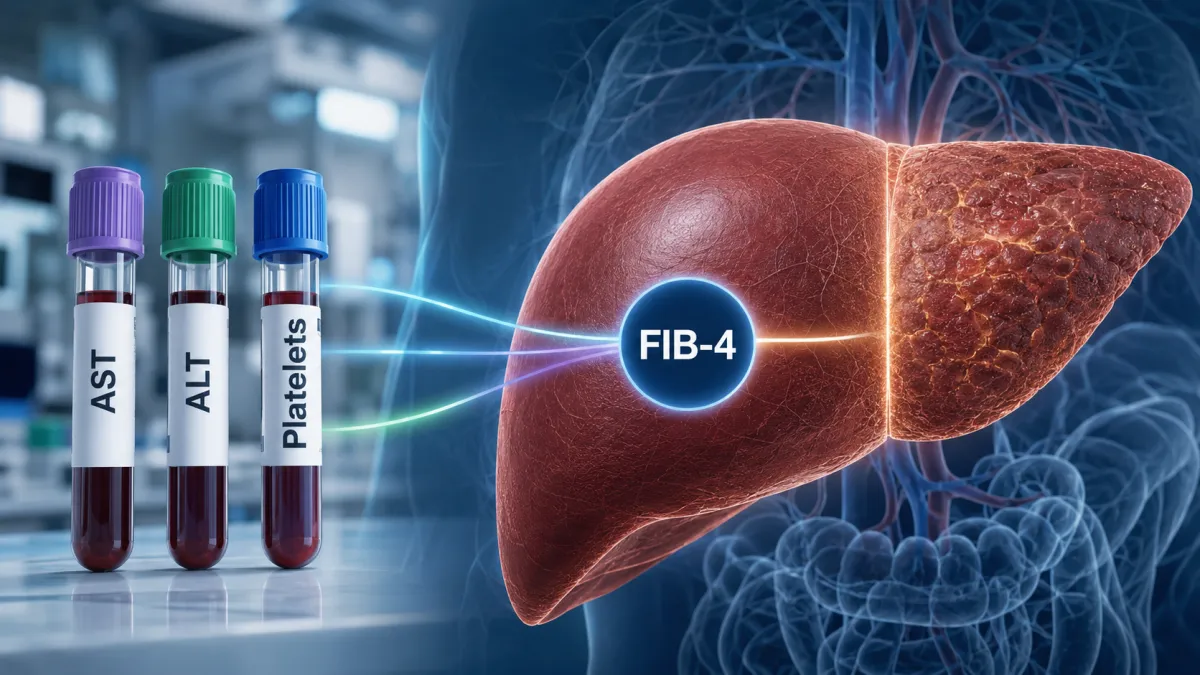
FIB-4 and Silent Metabolic Liver Disease
Introduction
Your liver can accumulate fat, develop inflammation and begin forming scar tissue without causing pain or obvious symptoms. Even routine liver enzymes may remain within the laboratory reference range while meaningful disease is already present. This is why metabolic liver disease is often discovered late—sometimes only after fibrosis has progressed toward cirrhosis.
Now called metabolic dysfunction-associated steatotic liver disease, or MASLD, the condition was previously known as nonalcoholic fatty liver disease. The newer name emphasizes its close relationship with insulin resistance, abdominal obesity, type 2 diabetes, abnormal triglycerides and other cardiometabolic problems. According to the National Institute of Diabetes and Digestive and Kidney Diseases, MASLD is usually silent and may produce few or no symptoms, even as more advanced liver damage develops.
The earliest stage involves excess fat accumulating inside liver cells. Some people remain at this stage, while others develop metabolic dysfunction-associated steatohepatitis, or MASH, in which fat is accompanied by inflammation and liver-cell injury. Over time, repeated injury can stimulate fibrosis—the replacement of healthy liver tissue with scar tissue. Fibrosis is the critical feature because it predicts the likelihood of cirrhosis, liver failure and liver cancer more strongly than liver fat alone.
Detecting fibrosis traditionally required specialized imaging or liver biopsy. However, a simple calculation called the fibrosis-4 index, or FIB-4, can provide an accessible first assessment using four pieces of information that may already be available in routine blood work: age, AST, ALT and platelet count. FIB-4 does not diagnose fatty liver or prove that fibrosis is present. Its role is to separate people who are unlikely to have advanced fibrosis from those who may need elastography, additional blood testing or evaluation by a liver specialist.
This approach has become particularly important for people with prediabetes and type 2 diabetes. The American Diabetes Association’s 2026 Standards of Care recommend using FIB-4 to screen adults with type 2 diabetes—and many adults with prediabetes and additional cardiometabolic risks—even when their liver enzymes are normal. The recommendation reflects an uncomfortable reality: relying on elevated AST or ALT alone can miss many people with clinically significant fibrosis.
FIB-4 turns common laboratory results into an early-warning system. It cannot replace clinical evaluation, but it can help reveal when apparently ordinary blood work contains evidence that the liver deserves a closer look.
🎧 Listen to the Episode:
A normal AST and ALT can be reassuring—but they don't directly tell you whether scar tissue is developing inside your liver.
In this episode of The Health Pulse, we explore FIB-4, a simple fibrosis screening calculation built from age, AST, ALT, and platelet count. We explain how MASLD can progress silently, why fibrosis matters more than liver fat alone, and when additional testing such as FibroScan or ELF may provide a clearer picture.
▶️ Click play below to listen, or keep reading to discover why understanding liver health requires looking beyond the green check marks on a routine metabolic panel.
What Is Metabolic Liver Disease?
Metabolic dysfunction-associated steatotic liver disease, or MASLD, occurs when excess fat accumulates in the liver alongside at least one cardiometabolic risk factor. These risk factors include overweight or abdominal obesity, insulin resistance, prediabetes, type 2 diabetes, high blood pressure, elevated triglycerides or low HDL cholesterol.
The liver normally stores a small amount of fat and plays a central role in regulating glucose, processing nutrients and packaging triglycerides for transport. Problems develop when more fatty acids enter or are produced within the liver than it can safely burn, export or store.
Insulin resistance is one of the main forces driving this imbalance. When adipose tissue becomes insulin resistant, it releases more fatty acids into the bloodstream, even when the body already has adequate energy available. Many of these fatty acids travel to the liver. High carbohydrate intake—particularly refined carbohydrates and excess fructose—can also stimulate the liver to convert glucose into fat through a process called de novo lipogenesis.
The liver attempts to manage this energy surplus by storing triglycerides or exporting them inside very-low-density lipoprotein particles. This helps explain why MASLD often appears alongside elevated triglycerides, increased ApoB-containing particles, abdominal obesity and impaired glucose regulation. Fatty liver is therefore not simply an isolated liver problem; it is often a visible expression of whole-body metabolic dysfunction.
Not all liver fat causes the same degree of injury. Triglyceride storage may initially protect liver cells by containing fatty acids in a relatively stable form. Greater concern develops when toxic lipid intermediates, oxidative stress, mitochondrial dysfunction and inflammatory signaling begin damaging liver cells. This more active stage is called metabolic dysfunction-associated steatohepatitis, or MASH.
Persistent injury activates hepatic stellate cells, which produce collagen and other components of scar tissue. Early fibrosis may be limited and potentially improve when the metabolic drivers are controlled. If injury continues, scarring can become more extensive, distort the liver’s architecture and eventually progress to cirrhosis.
This progression is not inevitable. Many people with MASLD never develop advanced fibrosis, while others progress more rapidly because of diabetes, genetics, age, obesity, alcohol exposure or additional liver disease. The challenge is determining who has simple steatosis and who may already be developing clinically important scarring.
The 2026 American Diabetes Association Standards of Care estimate that MASLD affects more than 70% of people with type 2 diabetes in the United States. This strong association is why fibrosis assessment is increasingly becoming part of comprehensive metabolic care rather than being reserved only for people with visibly abnormal liver enzymes.
Key takeaway: MASLD is an expression of metabolic dysfunction in which excess energy and disrupted fat handling cause liver fat accumulation. The greatest long-term danger is not fat alone, but the inflammation and fibrosis that may develop silently over time.
Why Liver Disease Stays Silent
The liver has a remarkable ability to compensate for injury. A large amount of functional reserve allows it to continue regulating glucose, producing proteins, processing medications and performing hundreds of other tasks even while fat, inflammation or fibrosis is developing. Symptoms often appear only after the disease has become more advanced.
When symptoms do occur, they are usually nonspecific. A person may experience fatigue, reduced energy or mild discomfort beneath the right rib cage. These symptoms can easily be attributed to stress, poor sleep, digestive problems or another condition. Many people with MASLD feel completely well.
Routine liver enzymes can create additional false reassurance. ALT and AST are released into the blood when cells are irritated or injured, but they do not directly measure liver fat, fibrosis or overall liver function. A person may have significant metabolic liver disease with values that remain inside the laboratory’s reference range.
Enzyme levels can also fluctuate. They may rise during an active period of inflammation and fall later, even if fibrosis remains. In more advanced disease, there may be fewer healthy liver cells available to release enzymes, so a declining ALT or AST does not always mean that the liver has recovered.
The definition of “normal” can itself be misleading. Laboratory reference intervals are commonly derived from broad populations that may include people with obesity, insulin resistance or unrecognized fatty liver. A result inside that statistical range is therefore not the same as proof that liver disease is absent.
This is particularly important in people with prediabetes or type 2 diabetes. The 2026 American Diabetes Association Standards of Care warn that a screening strategy based only on elevated aminotransferases would miss many people with MASH and clinically significant fibrosis. The recommendations call for FIB-4 risk assessment even when liver enzymes appear normal.
Platelet count provides another clue. As fibrosis becomes more advanced, changes in blood flow through the liver and enlargement of the spleen can contribute to a declining platelet count. A platelet result may still fall within the reference range but show a meaningful downward trend over time. FIB-4 combines this information with age, AST and ALT rather than interpreting each measurement separately.
The silent nature of metabolic liver disease makes risk-based screening essential. Waiting for jaundice, abdominal swelling, confusion or abnormal bleeding means waiting for signs that can occur in advanced liver disease. Earlier assessment aims to identify fibrosis risk while there is still time to address the metabolic drivers and perform appropriate confirmatory testing.
Key takeaway: Normal AST and ALT do not rule out metabolic liver disease or fibrosis. These enzymes reflect liver-cell injury at a particular moment, while FIB-4 uses several variables to estimate whether clinically important scarring may be present.
How FIB-4 Works
The fibrosis-4 index is a mathematical score that estimates the likelihood of clinically important liver fibrosis. It was originally developed for people with hepatitis C and HIV, but research later demonstrated that it could also help assess fibrosis risk in people with metabolic liver disease.
FIB-4 uses four readily available pieces of information:
Age
AST level
ALT level
Platelet count
The calculation is:
AST and ALT usually come from a comprehensive metabolic panel or hepatic function panel, while the platelet count comes from a complete blood count. Because these tests are commonly ordered together during routine physical examinations, many people already have the information needed to calculate their score.
Each component contributes different information. AST and ALT reflect current or recent liver-cell injury, although they can also be affected by medications, alcohol, strenuous exercise and conditions outside the liver. Platelet count can decline as advanced fibrosis changes blood flow through the liver and increases pressure within the portal circulation. Age is included because the likelihood of fibrosis generally rises over time.
FIB-4 is most useful as a first step in a sequential assessment. A low score can help identify people who are unlikely to have advanced fibrosis, reducing the need for immediate specialized testing. An intermediate or elevated score signals that more accurate evaluation may be needed through transient elastography, the enhanced liver fibrosis blood test or consultation with a liver specialist.
The score cannot show how much fat is inside the liver, distinguish MASLD from other liver diseases or determine an exact fibrosis stage. It can also be temporarily distorted by acute illness, alcohol-related injury, medication reactions or other causes of changing AST, ALT or platelet levels. An abnormal result should therefore be interpreted within the person’s complete clinical context.
FIB-4 also has important age limitations. It has not been well validated in adults younger than 35, and age can raise the score in older adults even without advanced fibrosis. This is why the appropriate threshold differs for people aged 65 and older.
Its strength is not diagnostic precision but accessibility. FIB-4 uses inexpensive tests that are already widely available to identify who is likely to remain in primary care monitoring and who should move to the next stage of evaluation.
Key takeaway: FIB-4 combines age, AST, ALT and platelet count to estimate fibrosis risk. It is a screening and risk-stratification tool—not a diagnosis or substitute for elastography, specialist evaluation or liver biopsy when those are needed.
Understanding Your FIB-4 Result
A FIB-4 result does not provide a diagnosis or an exact fibrosis stage. Instead, it places a person into a general risk category that helps determine whether routine monitoring or additional liver evaluation is appropriate.
For most adults between ages 35 and 64, a FIB-4 below 1.3 is considered low risk for advanced fibrosis. This result can provide reassurance that severe scarring is unlikely at that time, but it does not rule out liver fat, inflammation or early fibrosis. People with ongoing metabolic risk factors may still need the calculation repeated periodically.
A result between 1.3 and 2.67 is considered intermediate or indeterminate. This does not mean advanced fibrosis is present. It means FIB-4 cannot exclude it with enough confidence. The next step is usually a more specific assessment, such as transient elastography or the enhanced liver fibrosis blood test.
A FIB-4 above 2.67 indicates a higher probability of advanced fibrosis. The 2026 American Diabetes Association Standards of Care recommend that people in this category receive evaluation by a gastroenterologist or hepatologist. The score still requires clinical confirmation and should not be treated as proof of cirrhosis.
Age changes how the result should be interpreted. FIB-4 is less reliable in adults younger than 35 because the age component can keep the score artificially low. A reassuring result in this group should not override strong clinical evidence of liver disease.
In adults aged 65 and older, age can raise the score even when advanced fibrosis is absent. A threshold around 2.0 rather than 1.3 is commonly used to identify who needs additional testing. Clinical judgment remains important, especially when other risk factors or abnormal findings are present.
FIB-4 should also be interpreted cautiously during an acute illness or when AST, ALT or platelet count may be temporarily altered. Alcohol use, strenuous exercise, muscle injury, infections and certain medications can affect these laboratory values and distort the calculation.
People with type 2 diabetes deserve particular caution. Although a low FIB-4 makes advanced fibrosis less likely, diabetes substantially increases the underlying risk of MASH and fibrosis. A low score should not be used to dismiss persistent abnormalities, concerning imaging findings or multiple cardiometabolic risk factors.
Key takeaway: A low FIB-4 helps rule out advanced fibrosis, while an intermediate or high result identifies the need for more specific testing. Age, diabetes and temporary changes in laboratory values can affect how the score should be interpreted.
Who Should Be Screened?
FIB-4 is most useful in people with a meaningful risk of metabolic liver disease. It is not intended as a universal liver test for every healthy adult, but it can identify hidden fibrosis risk in populations where MASLD is common.
Adults with type 2 diabetes are a priority group. More than 70% of people with type 2 diabetes may have MASLD, and an estimated 12% to 20% may have MASH with clinically significant fibrosis. Because liver enzymes can remain normal, the 2026 American Diabetes Association Standards of Care recommend calculating FIB-4 in adults with type 2 diabetes even when AST and ALT are not elevated.
People with prediabetes may also benefit, particularly when additional cardiometabolic risks are present. These include abdominal obesity, elevated triglycerides, low HDL cholesterol, high blood pressure, insulin resistance or established cardiovascular disease. The more of these factors a person has, the greater the reason to consider liver fibrosis assessment.
FIB-4 may also be appropriate when an ultrasound, CT scan or MRI unexpectedly shows fatty liver. Imaging can identify liver fat but may not reliably determine whether significant fibrosis is present. Calculating FIB-4 provides an accessible first step before deciding whether elastography or specialist evaluation is necessary.
Persistently elevated AST or ALT is another reason for assessment, but metabolic liver disease should not automatically be assumed. Alcohol-related liver injury, viral hepatitis, autoimmune disease, medication effects, iron overload, thyroid disorders and other conditions can produce similar abnormalities. A low FIB-4 does not eliminate the need to investigate persistent enzyme elevations.
Additional risk factors include obstructive sleep apnea, polycystic ovary syndrome and a family history of cirrhosis or advanced metabolic liver disease. These conditions do not prove that fibrosis is present, but they may increase the value of screening when combined with insulin resistance or other metabolic abnormalities.
FIB-4 is less reliable in adults younger than 35 and should be interpreted with caution in those aged 65 and older. It should also be avoided or repeated later when an acute illness, recent heavy alcohol exposure, intense exercise or another temporary condition may have altered AST, ALT or platelet count.
Screening is most effective when it leads to a clear next step. A low score may support periodic monitoring, while an intermediate or high result should lead to more specific fibrosis assessment rather than repeated FIB-4 calculations alone.
Key takeaway: Adults with type 2 diabetes, prediabetes with cardiometabolic risk factors, incidental fatty liver or persistently abnormal liver enzymes are among those most likely to benefit from FIB-4 screening—even when they have no liver-related symptoms.
What Happens After an Elevated FIB-4?
An elevated FIB-4 does not confirm liver fibrosis. It identifies people who need a more specific test to determine whether significant scarring is likely. This second step is important because age, temporary enzyme elevations and changes in platelet count can raise FIB-4 even when advanced fibrosis is not present.
For a FIB-4 of 1.3 or higher, the preferred next step is usually a liver stiffness measurement using transient elastography, commonly known by the brand name FibroScan. This noninvasive test sends a painless vibration through the liver and measures how quickly it travels. Stiffer liver tissue may indicate more fibrosis, although inflammation, congestion and recent food intake can also influence the result.
According to the 2026 American Diabetes Association Standards of Care, a liver stiffness measurement below 8.0 kilopascals generally has a strong ability to exclude advanced fibrosis. These patients can often continue metabolic management and periodic monitoring outside a specialty liver clinic.
A measurement of 8.0 kilopascals or higher suggests a greater probability of advanced fibrosis and usually warrants referral to a gastroenterologist or hepatologist. The specialist may review medications, alcohol exposure, viral hepatitis risk, autoimmune markers, iron studies and other potential causes of liver injury before determining whether further imaging or biopsy is necessary.
When transient elastography is unavailable, the enhanced liver fibrosis test, or ELF, may be used. ELF measures three blood markers involved in the formation and breakdown of liver scar tissue. A result below 9.8 generally indicates lower risk of adverse liver outcomes, while a result of 9.8 or higher supports specialist evaluation.
People with a FIB-4 above 2.67 may be referred directly to a liver specialist because their probability of advanced fibrosis is higher. However, even a high score does not establish cirrhosis by itself. Additional assessment remains necessary before making a diagnosis or treatment decision.
Magnetic resonance elastography may be used when earlier tests are inconclusive or greater accuracy is required. Liver biopsy remains the most definitive way to evaluate MASH and determine fibrosis stage, but it is invasive and usually reserved for cases in which the result would meaningfully change management.
The overall process is sequential: begin with an inexpensive FIB-4 calculation, use elastography or ELF when the score is elevated, and reserve specialist procedures for people whose results suggest clinically important disease. This approach helps detect silent fibrosis without sending every person with fatty liver for invasive testing.
Key takeaway: An elevated FIB-4 is a signal for further evaluation, not a diagnosis. Transient elastography or ELF testing can more accurately determine who is likely to have significant fibrosis and who can continue routine monitoring.
Can Metabolic Liver Disease Improve?
MASLD is not necessarily permanent. Liver fat, inflammation and even some fibrosis can improve when the metabolic conditions driving the disease are addressed. The likelihood of improvement depends on the stage of disease, the person’s overall health and whether the underlying changes can be maintained.
For people with overweight or obesity, weight reduction is one of the most consistently supported interventions. Losing approximately 5% of body weight can reduce liver fat, while losses closer to 7% to 10% are more likely to improve MASH and may help fibrosis. Greater weight loss is not always necessary or appropriate, particularly in people who are already lean or at risk of losing muscle.
Nutrition should focus on reducing the metabolic burden placed on the liver. Limiting sugar-sweetened beverages, refined carbohydrates, excess fructose and ultra-processed foods can reduce the substrates used to produce liver fat. Mediterranean and lower-carbohydrate dietary patterns can both improve liver fat and cardiometabolic risk when they are built around minimally processed foods and can be sustained.
Low-carbohydrate and ketogenic diets can rapidly reduce liver fat and triglycerides in some people, even before substantial weight loss occurs. However, long-term evidence for reversing advanced fibrosis is more limited, and responses vary. People using insulin, sulfonylureas or blood-pressure medication may require medical supervision because carbohydrate restriction and weight loss can quickly change medication needs.
Exercise can improve liver fat and insulin sensitivity even when the scale changes very little. Aerobic activity increases energy use, while resistance training helps preserve or build muscle—the body’s largest site for glucose disposal. Combining both forms of exercise is generally more effective for overall metabolic health than relying on either alone.
Alcohol intake should be discussed honestly. Metabolic and alcohol-related liver injury can coexist, and even moderate alcohol exposure may add risk when fibrosis is already present. People with advanced fibrosis or cirrhosis are generally advised to avoid alcohol completely.
Medication may be appropriate for selected patients. The 2026 diabetes guidelines favor glucose-lowering treatments with demonstrated liver benefits when type 2 diabetes, obesity and MASH occur together. Semaglutide is FDA-approved for adults with MASH and moderate-to-advanced fibrosis, in addition to its other approved indications.
Resmetirom, sold as Rezdiffra, is another approved treatment for adults with noncirrhotic MASH and moderate-to-advanced fibrosis. It acts through the thyroid hormone receptor beta in the liver and must be prescribed and monitored by a clinician experienced in treating MASH. Neither medication is intended for someone with an elevated FIB-4 alone; the appropriate stage and diagnosis must first be established through validated testing and specialist evaluation.
Improvement should be followed with more than AST and ALT. Changes in metabolic markers, FIB-4, liver stiffness and overall cardiovascular risk provide a more complete view. Normalizing an enzyme is encouraging, but the deeper objective is to reduce liver fat, inflammation, fibrosis risk and the metabolic conditions that caused the disease.
Key takeaway: MASLD can improve through sustained changes in nutrition, physical activity, insulin sensitivity and body composition. Medication is available for selected people with confirmed MASH and significant fibrosis, but an elevated FIB-4 by itself is not enough to begin treatment.
How Lab Testing Helps
FIB-4 demonstrates how routine laboratory testing can provide more information when results are interpreted together. AST and ALT come from a comprehensive metabolic panel, while platelet count comes from a complete blood count. When combined with age, these values can produce an initial estimate of fibrosis risk without requiring a separate specialized blood draw.
The comprehensive metabolic panel provides additional information beyond AST and ALT. Albumin, bilirubin and alkaline phosphatase can help assess different aspects of liver health, although normal results do not exclude MASLD or fibrosis. Albumin and bilirubin often remain normal until liver disease becomes more advanced because the liver can maintain its essential functions for years.
A complete blood count provides the platelet count needed for the FIB-4 calculation. Platelet trends can be particularly informative. A gradual decline may deserve attention even when the latest result remains within the laboratory reference range, especially when other signs of chronic liver disease are present.
Metabolic markers help identify what may be driving liver fat accumulation. Fasting glucose and hemoglobin A1c detect abnormal glucose regulation, but they may remain normal during earlier insulin resistance. Fasting insulin can add context by showing whether the pancreas is producing more insulin to maintain an acceptable glucose level.
A lipid panel is also useful because MASLD often appears alongside elevated triglycerides, low HDL cholesterol and increased production of triglyceride-rich lipoproteins. ApoB can estimate the total number of atherogenic particles, connecting liver fat with the broader cardiovascular risk that commonly accompanies metabolic dysfunction.
Additional testing may be needed when liver enzymes remain elevated or the clinical pattern is atypical. Depending on the person’s history, a clinician may evaluate for hepatitis B or C, iron overload, autoimmune liver disease, thyroid dysfunction, medication effects or alcohol-related injury. MASLD should not become a default explanation that prevents investigation of other causes.
Laboratory testing cannot determine how much fat is present or establish an exact fibrosis stage. Ultrasound may detect steatosis, while transient elastography measures liver stiffness and can estimate liver fat through a controlled attenuation parameter. MRI-based methods provide greater precision in selected cases, and liver biopsy remains reserved for situations in which the result would meaningfully change care.
QuickLab Mobile provides at-home blood collection in Miami for the comprehensive metabolic panel, complete blood count, glucose markers, fasting insulin, lipid testing and other cardiometabolic tests that can support FIB-4 calculation and metabolic liver assessment. Results should be interpreted by a qualified healthcare professional, particularly when FIB-4 is elevated or liver abnormalities persist.
The goal is not simply to label someone with fatty liver. It is to identify the metabolic drivers, estimate fibrosis risk and determine whether routine monitoring or more advanced evaluation is appropriate.
Key takeaway: A comprehensive metabolic panel and complete blood count provide the AST, ALT and platelet count needed for FIB-4. Glucose, insulin and lipid markers help reveal the metabolic conditions driving liver disease, while elastography or specialist testing is needed when fibrosis risk is elevated.
Conclusion
Metabolic liver disease can progress quietly for years. A person may feel well, have liver enzymes within the laboratory reference range and still be developing clinically important fibrosis. Waiting for symptoms or markedly abnormal AST and ALT can allow an opportunity for earlier intervention to pass unnoticed.
FIB-4 offers a practical first step. By combining age, AST, ALT and platelet count, it helps identify people who are unlikely to have advanced fibrosis and those who may need transient elastography, an ELF blood test or evaluation by a liver specialist. It does not diagnose fatty liver, MASH or cirrhosis, but it can reveal when routine blood results deserve a closer look.
This assessment is particularly important for adults with type 2 diabetes, prediabetes, abdominal obesity, elevated triglycerides and other signs of insulin resistance. Identifying fibrosis risk early creates an opportunity to address the metabolic drivers before liver damage becomes more difficult to reverse.
QuickLab Mobile offers convenient at-home blood collection in Miami for the comprehensive metabolic panel, complete blood count and cardiometabolic markers used to assess liver and metabolic health. Results should be reviewed with a qualified healthcare professional who can calculate FIB-4, interpret it within the correct age and clinical context, and recommend additional evaluation when necessary.
👉 Need a specimen collection?. Book Now
Disclaimer:
The information provided in this blog, podcast, and associated content is for educational and informational purposes only and is not intended as a substitute for professional medical advice, diagnosis, or treatment. The content shared is based on reputable sources, medical literature, and expert insights, but it should not be used as a replacement for direct consultation with a licensed healthcare provider.
No Doctor-Patient Relationship: Engaging with this content does not create a doctor-patient relationship between you and QuickLabMobile or any contributors. Always consult with a qualified physician, specialist, or healthcare professional before making any medical decisions, changing your treatment plan, or starting/stopping any medications.
Not a Substitute for Medical Advice: While we strive to provide accurate and up-to-date information, medicine is constantly evolving. New research, treatments, and medical recommendations may emerge, and individual health conditions can vary. Do not rely solely on this content for health decisions. If you are experiencing symptoms, have concerns about your health, or require medical assistance, seek immediate care from a licensed medical professional.
Emergency Situations: If you are experiencing a medical emergency, such as difficulty breathing, chest pain, signs of a stroke, or any other life-threatening condition, call 911 (or your local emergency services) immediately. Do not delay seeking emergency care based on information provided here.
Liability Disclaimer: QuickLabMobile, its contributors, and any associated entities do not assume liability for any damages, harm, or adverse outcomes resulting from the use, interpretation, or misuse of the information provided in this content. You are responsible for your own healthcare decisions and should always verify information with a trusted medical professional.
External Links & References: This content may include links to external sources, medical studies, or third-party websites for further reading. These links are provided for convenience and informational purposes only. QuickLabMobile does not endorse, control, or take responsibility for the accuracy of external content. Always verify information with authoritative sources such as the CDC, NIH, WHO.
Final Note: Your health is unique, and what works for one person may not be suitable for another. Stay informed, ask questions, and always prioritize professional medical guidance