Heart Failure: A Metabolic Disease?
Introduction
Heart failure is traditionally viewed as a mechanical problem.
The heart becomes weaker, its ability to pump blood declines, and patients develop symptoms such as shortness of breath, fatigue, swelling of the legs, and reduced exercise tolerance. Treatment has therefore focused primarily on improving cardiac function, controlling blood pressure, removing excess fluid, and reducing the workload placed on the heart.
While these approaches remain essential, researchers have increasingly recognized that another process is occurring beneath the surface.
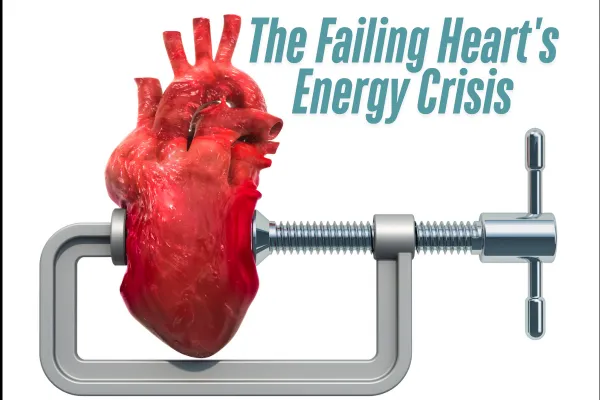
The failing heart is also experiencing an energy crisis.
The heart is one of the most metabolically active organs in the body, contracting more than 100,000 times every day without rest. To sustain this extraordinary workload, it consumes enormous amounts of ATP, the molecule that powers every heartbeat. Nearly all of this energy is produced by mitochondria through oxidative metabolism.
In heart failure, however, this energy-producing system begins to deteriorate.
Researchers have identified abnormalities in mitochondrial function, impaired fatty acid oxidation, reduced ATP production, oxidative stress, and altered fuel utilization within failing heart muscle. As energy production declines, the heart not only becomes weaker—it also becomes less efficient at performing the work required to sustain circulation.
This realization has transformed the way scientists think about heart failure.
Rather than viewing it solely as a disease of impaired pumping, many researchers now consider heart failure to be a disease of metabolic dysfunction as well. Understanding how the heart produces and utilizes energy has opened new avenues of research, including therapies designed to improve cardiac metabolism rather than simply treating symptoms.
In this article, you'll learn how the healthy heart generates energy, what happens to cardiac metabolism in heart failure, why ketones have become an area of growing scientific interest, and how metabolic health may influence the progression of this common condition.
🎧 Listen to the Episode: The Heart's Energy Crisis
Heart failure may begin long before the heart weakens—it may begin when the cells that power every heartbeat start running low on energy.
In this episode of The Health Pulse, we explore mitochondria, metabolic flexibility, ketone metabolism, and the emerging science behind heart failure as a metabolic disease, revealing why supporting cellular energy may become a cornerstone of future cardiovascular care.
▶️ Click play below to listen, or keep reading to discover how metabolism, mitochondria, and modern diagnostics are reshaping our understanding of heart failure from the inside out.
How the Healthy Heart Produces Energy
The heart is often described as the hardest-working muscle in the body, but it is also one of the most metabolically demanding organs.
Unlike skeletal muscle, which can rest between periods of activity, the heart contracts continuously from before birth until the end of life. To sustain this relentless workload, it must generate an enormous amount of ATP every second.
Under normal conditions, the healthy heart is metabolically flexible.
Rather than depending on a single fuel source, it continuously adjusts its metabolism according to nutrient availability, hormonal signals, and energy demand.
Approximately 60–80% of the heart's ATP is typically generated from the oxidation of fatty acids, making fat its preferred fuel under resting conditions. The remaining energy comes primarily from:
Glucose
Lactate
Ketone bodies
Amino acids (to a lesser extent)
All of these fuels eventually converge within the mitochondria, where they are converted into acetyl-CoA and enter the citric acid cycle. The electrons generated during this process flow through the electron transport chain, driving oxidative phosphorylation and producing the ATP required for every heartbeat.
This remarkable flexibility gives the healthy heart an important advantage.
If one fuel becomes less available, the heart can rapidly increase its use of another. During prolonged exercise, fasting, or nutritional ketosis, for example, ketone utilization increases. After a carbohydrate-rich meal, glucose oxidation rises. This ability to adapt ensures that the heart continues producing energy under a wide range of physiological conditions.
The heart also contains one of the highest concentrations of mitochondria in the body. In fact, mitochondria occupy nearly one-third of the volume of a healthy cardiac muscle cell, reflecting the tremendous energy demands placed on this organ.
The key point is that the healthy heart is not only a powerful pump—it is also an extraordinarily efficient metabolic engine. Its ability to continuously switch between multiple fuel sources allows it to meet one of the highest energy demands of any organ in the human body.
How the Healthy Heart Produces Energy
As heart failure develops, the problem extends far beyond weakened contractions. The heart undergoes profound metabolic changes that reduce its ability to produce the energy needed to sustain normal function.
One of the earliest abnormalities is mitochondrial dysfunction.
The mitochondria become less efficient at generating ATP, and the amount of energy available for each heartbeat gradually declines. At the same time, oxidative stress increases, further damaging mitochondrial proteins, lipids, and mitochondrial DNA. This creates a vicious cycle in which impaired energy production leads to even greater mitochondrial dysfunction.
Another major change involves fuel selection.
In the healthy heart, fatty acids provide most of the energy required for continuous contraction. In heart failure, however, the heart's ability to oxidize fatty acids often declines. Glucose utilization may initially increase as a compensatory response, but as the disease progresses, even glucose metabolism becomes impaired.
The result is a heart that has lost much of its metabolic flexibility.
Instead of efficiently switching between available fuels, the failing heart becomes metabolically inefficient and struggles to generate adequate ATP regardless of the fuel source.
Researchers sometimes describe this as an "engine running out of fuel."
The heart is still attempting to pump continuously, but the machinery responsible for producing energy is no longer operating at full capacity.
These metabolic abnormalities have important consequences.
Reduced ATP availability affects:
Cardiac contraction
Cardiac relaxation
Calcium handling
Electrical conduction
Overall pumping efficiency
In other words, the failing heart is not only structurally impaired—it is energetically compromised.
This shift in thinking has changed how researchers approach heart failure. Rather than asking only how to make the heart pump harder, many are now asking how to help the heart produce energy more efficiently.
That question has led to growing interest in one fuel source that appears to become increasingly important in heart failure: ketones.
Why Ketones Have Become a Focus of Heart Failure Research
One of the most surprising discoveries in recent years is that the failing heart appears to increase its use of ketones.
Unlike the healthy heart, which derives most of its energy from fatty acids, the failing heart undergoes a metabolic shift. As fatty acid oxidation becomes less efficient and overall energy production declines, researchers have observed an increased expression of enzymes responsible for ketone metabolism.
This suggests that the heart may be attempting to compensate for its energy deficit by utilizing an alternative fuel.
Ketones—primarily beta-hydroxybutyrate and acetoacetate—are produced by the liver during fasting, carbohydrate restriction, prolonged exercise, or with the use of certain medications such as SGLT2 inhibitors. Once released into the bloodstream, they are readily taken up by cardiac muscle and converted into ATP within the mitochondria.
Several characteristics make ketones particularly interesting in heart failure.
First, ketones are an efficient fuel source. Some researchers have proposed that ketone oxidation may generate ATP with a favorable oxygen cost compared with certain other fuels, potentially benefiting a heart that is already under energetic stress.
Second, ketones may influence more than energy production.
Beta-hydroxybutyrate functions as a signaling molecule capable of affecting:
Oxidative stress
Inflammatory pathways
Mitochondrial function
Gene expression
These effects may help create a metabolic environment that supports cardiac function beyond simply supplying fuel.
This has led to an intriguing hypothesis.
Rather than representing an abnormal adaptation, the increased use of ketones by the failing heart may actually be a compensatory mechanism designed to preserve energy production when conventional fuel metabolism begins to fail.
Supporting this idea, some of the cardiovascular benefits observed with SGLT2 inhibitors—medications originally developed to treat type 2 diabetes—may be partially explained by their ability to modestly increase circulating ketone levels. Although these drugs have multiple beneficial effects, the "ketone hypothesis" remains an active area of investigation.
It is important to emphasize that ketones are unlikely to be the entire answer.
Heart failure is a complex disease involving structural remodeling, neurohormonal activation, inflammation, fibrosis, mitochondrial dysfunction, and impaired metabolism. Ketones represent one piece of this larger puzzle.
The key point is that the heart appears capable of adapting its fuel preference in response to metabolic stress. Understanding why the failing heart turns to ketones may help researchers develop new therapies aimed at improving cardiac energy production rather than simply treating the symptoms of heart failure.
What Does the Research Show?
The recognition that heart failure is, in part, a metabolic disease has led to an entirely new area of cardiovascular research. Rather than focusing exclusively on improving the heart's pumping ability, scientists are investigating therapies that improve the heart's ability to produce energy.
One of the strongest pieces of evidence supporting this concept comes from the success of SGLT2 inhibitors.
Originally developed to lower blood glucose in people with type 2 diabetes, these medications were later found to significantly reduce hospitalizations for heart failure and improve cardiovascular outcomes—even in patients without diabetes. This unexpected finding suggested that their benefits extend well beyond glucose control.
Researchers believe several mechanisms may contribute to these effects.
SGLT2 inhibitors:
Increase circulating ketone levels
Improve metabolic efficiency
Reduce cardiac workload
Promote natriuresis and reduce fluid overload
Improve mitochondrial function
Reduce oxidative stress and inflammation
Although it is unlikely that ketones alone explain these benefits, many scientists believe they may contribute by providing the failing heart with an efficient alternative fuel.
Researchers have also investigated ketogenic diets, ketone esters, and exogenous ketone supplements as potential therapeutic strategies.
Early studies suggest that increasing ketone availability may improve certain measures of cardiac energy metabolism and exercise capacity in some patients. However, the evidence remains preliminary, and larger clinical trials are needed to determine which patients are most likely to benefit and whether these approaches improve long-term outcomes.
Importantly, heart failure is not a single disease.
Patients with heart failure with reduced ejection fraction (HFrEF) and those with heart failure with preserved ejection fraction (HFpEF) have different underlying mechanisms, and metabolic therapies may not affect both conditions in the same way.
For this reason, ketogenic metabolic therapy should not currently be viewed as a standard treatment for heart failure.
Instead, it represents an exciting and rapidly evolving area of research that reflects a broader shift in cardiovascular medicine—from treating heart failure solely as a mechanical problem to recognizing it as a disorder of impaired energy metabolism as well.
The key point is that improving cardiac metabolism has become a legitimate therapeutic target. While much remains to be learned, understanding how the heart produces and utilizes energy may help shape the next generation of heart failure treatments.
How Lab Testing Can Help Evaluate Cardiac Metabolic Health
Heart failure cannot be diagnosed through routine blood work alone. Imaging studies such as echocardiography, along with clinical evaluation and, in many cases, biomarkers such as BNP or NT-proBNP, remain essential for diagnosing and monitoring the condition.
However, laboratory testing can provide valuable insight into the metabolic environment that influences cardiac function and may contribute to disease progression.
One of the most important markers is fasting insulin.
Chronically elevated insulin reflects insulin resistance, a condition associated with impaired metabolic flexibility, mitochondrial dysfunction, endothelial dysfunction, and an increased risk of both cardiovascular disease and heart failure.
Markers of glucose regulation, including fasting glucose and HbA1c, help assess long-term glycemic control. Poor glucose regulation places continuous metabolic stress on the heart and contributes to oxidative stress and vascular injury.
Lipid testing should extend beyond total cholesterol. ApoB provides a measure of the number of atherogenic lipoprotein particles, while triglycerides and HDL cholesterol offer additional information about insulin sensitivity and overall metabolic health.
Inflammatory markers such as hs-CRP may help identify chronic low-grade inflammation, which contributes to endothelial dysfunction, myocardial remodeling, and progression of cardiovascular disease.
Kidney function is equally important. Heart failure and kidney disease frequently coexist, and monitoring creatinine, estimated GFR, and electrolytes helps evaluate both disease severity and treatment safety.
Because mitochondrial function depends on adequate nutritional status, markers such as iron studies, vitamin B12, magnesium, and vitamin D may also provide useful clinical information, particularly in patients experiencing fatigue or reduced exercise tolerance.
At QuickLab Mobile, we help patients monitor many of these metabolic and cardiovascular markers through comprehensive at-home lab testing in Miami. By evaluating insulin resistance, glucose regulation, lipid particles, inflammation, kidney function, and nutritional status, patients and their healthcare providers can gain a more complete understanding of the metabolic factors that influence heart health.
The goal is not simply to identify heart failure after symptoms appear. It is to recognize the metabolic abnormalities that often accompany cardiovascular disease and provide objective data that can support prevention, monitoring, and informed treatment decisions.
Conclusion
Heart failure has long been viewed as a disease of weakened cardiac muscle and impaired pumping function. While these structural changes remain central to the condition, modern research has revealed another equally important dimension: the failing heart is also an organ struggling to produce enough energy.
Healthy cardiac muscle is remarkably metabolically flexible, continuously switching between fatty acids, glucose, lactate, and ketones to meet its enormous energy demands. In heart failure, this flexibility declines as mitochondrial function deteriorates, ATP production falls, oxidative stress increases, and the heart becomes progressively less efficient at generating the energy required for every heartbeat.
This metabolic perspective has opened an exciting new chapter in cardiovascular medicine.
The observation that the failing heart increases its use of ketones, along with the remarkable success of SGLT2 inhibitors in reducing heart failure outcomes, has shifted attention toward therapies that support cardiac metabolism rather than simply improving hemodynamics. Although much remains to be learned, these discoveries suggest that restoring metabolic health may become an increasingly important component of heart failure management.
It is important to emphasize that heart failure remains a complex disease. Structural remodeling, fibrosis, neurohormonal activation, vascular dysfunction, inflammation, and impaired metabolism all contribute to its progression. Metabolic therapies should therefore be viewed as complementary to, rather than replacements for, evidence-based medical treatment.
Perhaps the greatest lesson from this emerging field is that the heart is far more than a mechanical pump. It is one of the most metabolically active organs in the body, and its ability to continuously generate energy is just as important as its ability to contract.
At QuickLab Mobile, we help patients evaluate many of the metabolic factors that influence cardiovascular health through comprehensive at-home lab testing in Miami, including fasting insulin, glucose regulation, ApoB, lipid profiles, inflammatory markers, kidney function, and nutritional assessments.
Understanding heart failure as both a mechanical and metabolic disease encourages a broader approach to cardiovascular health—one that focuses not only on improving cardiac function, but also on supporting the cellular energy systems that power every heartbeat.
👉 Book Your Test Now
Disclaimer:
The information provided in this blog, podcast, and associated content is for educational and informational purposes only and is not intended as a substitute for professional medical advice, diagnosis, or treatment. The content shared is based on reputable sources, medical literature, and expert insights, but it should not be used as a replacement for direct consultation with a licensed healthcare provider.
No Doctor-Patient Relationship: Engaging with this content does not create a doctor-patient relationship between you and QuickLabMobile or any contributors. Always consult with a qualified physician, specialist, or healthcare professional before making any medical decisions, changing your treatment plan, or starting/stopping any medications.
Not a Substitute for Medical Advice: While we strive to provide accurate and up-to-date information, medicine is constantly evolving. New research, treatments, and medical recommendations may emerge, and individual health conditions can vary. Do not rely solely on this content for health decisions. If you are experiencing symptoms, have concerns about your health, or require medical assistance, seek immediate care from a licensed medical professional.
Emergency Situations: If you are experiencing a medical emergency, such as difficulty breathing, chest pain, signs of a stroke, or any other life-threatening condition, call 911 (or your local emergency services) immediately. Do not delay seeking emergency care based on information provided here.
Liability Disclaimer: QuickLabMobile, its contributors, and any associated entities do not assume liability for any damages, harm, or adverse outcomes resulting from the use, interpretation, or misuse of the information provided in this content. You are responsible for your own healthcare decisions and should always verify information with a trusted medical professional.
External Links & References: This content may include links to external sources, medical studies, or third-party websites for further reading. These links are provided for convenience and informational purposes only. QuickLabMobile does not endorse, control, or take responsibility for the accuracy of external content. Always verify information with authoritative sources such as the CDC, NIH, WHO.
Final Note: Your health is unique, and what works for one person may not be suitable for another. Stay informed, ask questions, and always prioritize professional medical guidance