Keto Beyond Weight Loss: What a New Controlled Trial Found
Introduction
Weight loss improves insulin sensitivity, blood glucose and liver fat—but does the type of diet matter once the amount of weight lost is held constant? That question has been difficult to answer because people following different diets rarely lose exactly the same amount of weight, making it hard to separate the effects of diet composition from the effects of weight reduction itself.
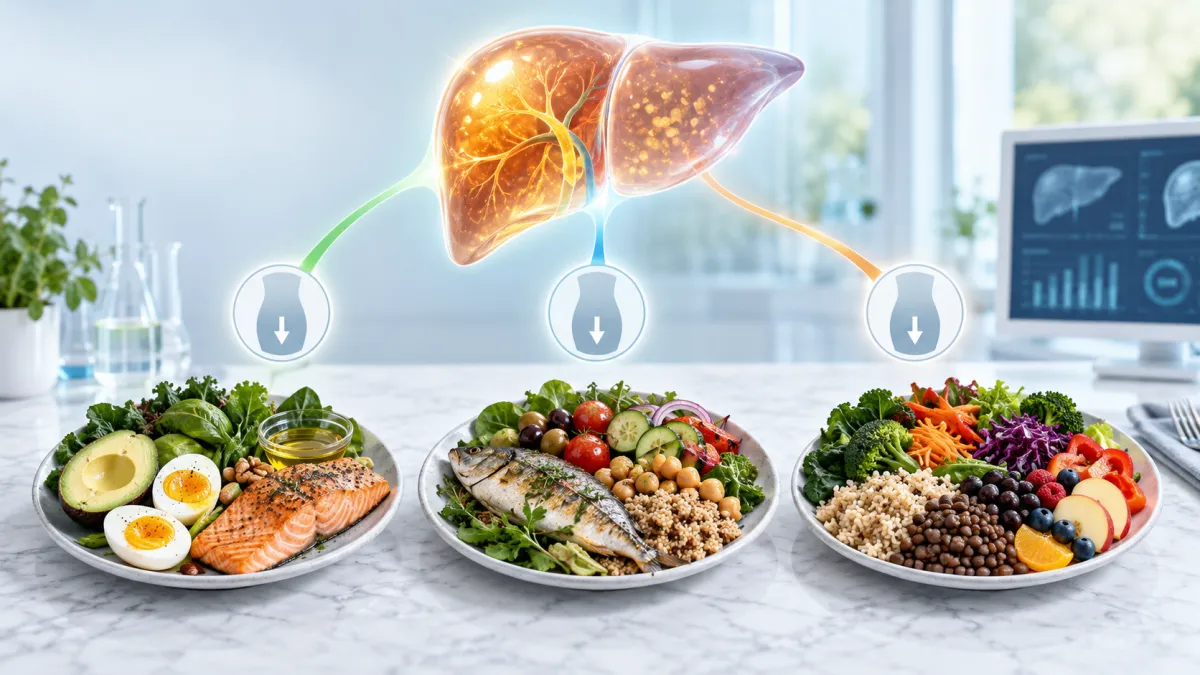
A new randomized controlled-feeding trial published in Cell Metabolism offers unusually useful evidence. Researchers randomized 42 adults with obesity, prediabetes and hepatic steatosis to one of three diets: a very-low-carbohydrate ketogenic diet, a Mediterranean diet or a very-low-fat plant-forward diet. The investigators provided the meals and adjusted calorie intake so participants in all three groups lost approximately 10% of their body weight. This design allowed the researchers to examine whether carbohydrate and fat intake influenced metabolic health independently of weight loss.
All three diets produced meaningful benefits. Skeletal-muscle insulin sensitivity improved by approximately 50%, demonstrating how strongly weight reduction alone can improve the muscles’ ability to respond to insulin. However, the ketogenic diet produced greater improvements in several liver and glucose-related outcomes. Hepatic insulin sensitivity improved approximately two to three times more, liver fat decreased more substantially, and participants experienced greater reductions in hemoglobin A1c, 24-hour glucose and circulating insulin.
These findings challenge the idea that every metabolically beneficial effect of a ketogenic diet can be explained by weight loss alone. They also highlight an important distinction: insulin resistance does not occur uniformly throughout the body. Weight loss benefited skeletal muscle across all three diets, while carbohydrate restriction appeared to provide an additional advantage in the liver—the organ responsible for regulating glucose production during fasting.
The trial does not establish that a ketogenic diet is universally superior. The sample was small, the intervention occurred during active weight loss, and the study cannot determine whether the differences will persist during long-term weight maintenance. It also does not replace the extensive cardiovascular evidence supporting Mediterranean dietary patterns. Instead, it provides controlled human evidence that macronutrient composition may influence hepatic insulin resistance, liver fat and glucose regulation even when weight loss is carefully matched.
In this article, we will examine how the trial was designed, what changed in each diet group, why the liver responded differently from skeletal muscle and what the findings may mean for people with prediabetes, insulin resistance and metabolic fatty liver disease. We will also discuss the study’s limitations and the laboratory markers that can help determine whether a dietary intervention is improving metabolic health.
🎧 Listen to the Episode: Does Diet Composition Matter Beyond Weight Loss?
Most diet comparisons have a frustrating problem: one group loses more weight than another, making it difficult to determine whether the benefits came from the diet itself or simply from losing more body fat.
In this episode of The Health Pulse, we explore a controlled feeding study designed to separate those effects. With weight loss deliberately matched across ketogenic, Mediterranean, and very-low-fat plant-forward diets, researchers found a fascinating split: skeletal muscle insulin sensitivity improved broadly with weight loss, while liver fat and hepatic insulin sensitivity responded differently depending on diet composition.
▶️ Click play below to listen, or keep reading to discover what happens when researchers hold weight loss constant and finally ask a more precise question: does what you eat still matter when the scale moves exactly the same amount?
Read the study in Cell Metabolism
How the Study Was Designed
Most nutrition studies ask participants to follow dietary instructions while continuing to prepare their own meals. Researchers must then depend on food records, questionnaires or participant recall to determine what was actually eaten. This creates uncertainty because adherence can vary considerably between individuals and diet groups.
The new Cell Metabolism trial used a more controlled approach. Researchers studied adults with obesity who also had prediabetes and excess liver fat, creating a population already showing several interconnected signs of metabolic dysfunction. Participants were randomly assigned to one of three distinctly different dietary patterns.
The very-low-carbohydrate ketogenic diet provided approximately 4% of calories from carbohydrates and 73% from fat. The Mediterranean diet provided approximately 50% of calories from carbohydrates and 35% from fat. The very-low-fat plant-forward diet obtained approximately 70% of its calories from carbohydrates and only 15% from fat.
These were not simply three sets of dietary recommendations. The research team provided the food and adjusted each participant’s energy intake until approximately 10% of initial body weight had been lost. This prevented one group’s results from appearing better merely because its participants lost more weight.
The endpoint was therefore not a fixed number of weeks for everyone. Participants continued their assigned intervention until they reached the study’s weight-loss target. Because the ketogenic diet may influence appetite, water balance and early body-weight changes differently from higher-carbohydrate diets, matching the final percentage of weight loss was essential for a meaningful comparison.
The investigators also looked beyond fasting glucose and body weight. They assessed glucose throughout the day, circulating insulin, hemoglobin A1c, liver fat and the body’s response to insulin. Importantly, they evaluated hepatic and skeletal-muscle insulin sensitivity separately. This distinction matters because insulin resistance can improve differently in different organs.
The liver determines how much glucose enters the circulation during fasting, while skeletal muscle is responsible for disposing of a large portion of glucose after a meal. A diet might improve one tissue more than another, even when routine blood testing makes the overall response appear similar.
All three groups experienced approximately a 50% improvement in skeletal-muscle insulin sensitivity after losing weight. The absence of a major difference between the diets suggests that weight loss itself was the dominant factor behind the improvement in muscle. The liver told a different story: the ketogenic group experienced substantially greater improvement in hepatic insulin sensitivity than either comparison group.
The trial’s controlled-feeding design strengthens confidence that diet composition contributed to these differences. However, it does not recreate ordinary life, where people purchase their own food, encounter social pressures and must sustain the diet without meals being provided. Its tightly controlled design gives the study strong internal validity, but its small sample and intensive support limit how confidently the results can be generalized.
Key takeaway: By providing the food and matching weight loss across three very different diets, the researchers were able to isolate metabolic effects that could not be explained simply by one group losing more weight.
Why the Liver Responded Differently
The clearest separation between the three diets appeared in the liver. After approximately 10% weight loss, liver fat decreased by an average of about 67% in the ketogenic group, compared with approximately 45% in both the Mediterranean and very-low-fat plant-forward groups. Hepatic insulin sensitivity also improved roughly two to three times more with the ketogenic diet.
This matters because fatty liver and hepatic insulin resistance reinforce one another. When the liver becomes resistant to insulin, it may continue releasing glucose even when insulin levels are already elevated. At the same time, insulin can retain enough of its signaling ability to promote the conversion of excess carbohydrate into fat. The liver can therefore produce too much glucose while continuing to accumulate triglycerides—a pattern sometimes described as selective or partial hepatic insulin resistance.
All three diets reduced body weight and overall fat mass, which helped remove some of the metabolic pressure on the liver. The ketogenic diet added a second change: it sharply reduced the amount of dietary carbohydrate entering the glucose-insulin pathway. Participants following keto had lower circulating insulin and higher glucagon than those in the other groups.
Lower insulin reduces signals that favor fat storage and suppress fat mobilization. A higher glucagon-to-insulin ratio can promote hepatic fat oxidation and ketone production. Carbohydrate restriction also reduces the glucose-derived material available for de novo lipogenesis, the process through which the liver converts excess carbohydrate into fatty acids.
These mechanisms may help explain why liver fat fell more in the ketogenic group even though weight loss was comparable. The difference was not simply that keto participants became lighter. Their hormonal and metabolic environment changed in a way that favored using and exporting stored liver fat rather than continuing to produce it.
The result should not be interpreted to mean that dietary fat automatically removes fat from the liver. Energy balance, insulin concentrations, adipose-tissue function and the type of fat consumed all matter. A calorie-surplus ketogenic diet could produce a different response from the calorie-restricted diet used in this trial.
It is also important to distinguish liver fat from liver fibrosis. A reduction in steatosis is metabolically encouraging, but the study was not designed to establish that ketogenic eating reverses advanced fibrosis, cirrhosis or every form of metabolic liver disease. Those outcomes require longer studies and more specific fibrosis assessment.
Key takeaway: Matching weight loss revealed an organ-specific effect. Every diet improved skeletal-muscle insulin sensitivity, but the ketogenic diet produced a substantially greater reduction in liver fat and a larger improvement in the liver’s response to insulin.
What Happened to Prediabetes?
The ketogenic diet also produced the strongest improvements in glucose regulation. Participants had greater reductions in hemoglobin A1c, 24-hour glucose concentrations and circulating insulin than those following the Mediterranean or very-low-fat plant-forward diets.
By the end of the intervention, 50% of participants in the ketogenic group no longer met the laboratory criteria for prediabetes. The same was true for 29% of the Mediterranean group and 7% of the plant-forward group. Because everyone lost approximately the same percentage of body weight, the difference suggests that carbohydrate restriction affected glucose regulation through more than weight loss alone.
The reduction in insulin is particularly important. Blood glucose can improve because the pancreas is producing more insulin, because the tissues have become more sensitive to insulin or because the diet requires less insulin to manage incoming nutrients. These are not metabolically equivalent situations.
A very-low-carbohydrate diet reduces the amount of glucose entering the circulation after meals. This lowers the immediate demand placed on pancreatic beta cells and may reduce the amount of insulin needed throughout the day. Improved hepatic insulin sensitivity can further reduce inappropriate glucose release from the liver, creating a lower glucose and insulin environment.
The 24-hour measurements strengthen the findings because fasting glucose provides only one moment in a continuously changing system. Two people can have similar fasting glucose while experiencing very different post-meal excursions and insulin exposure during the rest of the day. In this trial, the ketogenic group’s advantage was visible across the daily monitoring period rather than only in a single morning result.
However, no longer meeting prediabetes criteria after short-term weight loss does not guarantee permanent protection from type 2 diabetes. The underlying susceptibility may return if weight is regained, liver fat accumulates again or the dietary intervention is discontinued. The study evaluated the metabolic response during active, supported weight loss—not the durability of that response over several years.
The findings also do not mean that everyone with prediabetes must enter nutritional ketosis. The Mediterranean diet still produced substantial weight loss and metabolic improvement, and individual factors such as medication use, kidney function, food preferences, nutritional status and the ability to sustain the diet must be considered.
What the trial does demonstrate is that the carbohydrate content of a diet can influence glucose and insulin outcomes even when the amount of weight lost is held constant. For people with hyperinsulinemia, fatty liver and carbohydrate intolerance, that distinction may be clinically meaningful.
Key takeaway: Half of the ketogenic group no longer met prediabetes criteria after losing approximately 10% of body weight. Lower A1c, 24-hour glucose and insulin suggest that carbohydrate restriction reduced both glucose exposure and the insulin required to manage it.
What Happened to Cholesterol?
A common concern about ketogenic diets is that replacing carbohydrate with substantially more dietary fat will automatically increase LDL cholesterol and cardiovascular risk. That did not occur at the group level in this trial.
Despite obtaining approximately 73% of calories from fat, the ketogenic group did not experience a significant increase in LDL cholesterol or ApoB compared with the Mediterranean and very-low-fat plant-forward groups. Triglycerides and several other cardiometabolic markers also improved during weight loss.
ApoB is especially important because it estimates the number of atherogenic lipoprotein particles capable of entering the arterial wall. LDL cholesterol measures how much cholesterol those particles carry, while ApoB provides a closer approximation of how many potentially atherogenic particles are circulating. A ketogenic diet that lowers glucose and triglycerides but substantially raises ApoB would require a more cautious cardiovascular interpretation.
The absence of an average ApoB increase is therefore reassuring, but it should not be generalized to every person following keto. Lipid responses to carbohydrate restriction vary considerably. Some people experience lower triglycerides, higher HDL cholesterol and little change in ApoB, while others develop a marked increase in LDL cholesterol and LDL particle number.
Several factors may explain why this study did not show worsening atherogenic markers. Participants were actively losing approximately 10% of their body weight, had obesity and metabolic dysfunction at baseline, and consumed food selected and provided by the investigators. Their response may differ from that of a lean person following a high-saturated-fat ketogenic diet during weight maintenance.
The trial was also too small and too short to evaluate heart attacks, strokes, coronary plaque progression or cardiovascular mortality. Similar lipid values between the groups during several months of weight loss cannot establish that the diets have identical long-term cardiovascular effects. The Mediterranean diet continues to have a much larger body of evidence supporting cardiovascular outcomes, while comparable long-term outcome data for ketogenic diets remain limited.
These findings should therefore be interpreted as evidence against the claim that a high-fat ketogenic diet must inevitably worsen blood lipids. They are not evidence that lipid monitoring becomes unnecessary. A standard lipid panel, ApoB, lipoprotein(a), blood pressure, glucose regulation, smoking history and existing plaque burden should all be considered when evaluating cardiovascular risk.
For someone beginning a ketogenic diet, baseline and follow-up testing can reveal whether the metabolic improvements are occurring without an unfavorable rise in atherogenic particles. The response should be measured rather than predicted solely from the diet’s fat content.
Key takeaway: The ketogenic group improved liver and glucose-related outcomes without a significant group-level increase in LDL cholesterol or ApoB. However, individual responses vary, and this short trial did not measure long-term cardiovascular events.
Is Keto the Better Diet?
The trial supports a more precise conclusion than simply declaring one diet the winner. All three dietary patterns produced approximately 10% weight loss, reduced liver fat and improved skeletal-muscle insulin sensitivity. The ketogenic diet provided additional advantages in hepatic insulin sensitivity, daily glucose exposure, insulin concentrations and liver-fat reduction.
For a person with prediabetes, hyperinsulinemia and fatty liver, those outcomes are highly relevant. They suggest that restricting carbohydrate may target the metabolic abnormalities most directly connected with progression toward type 2 diabetes. The results also weaken the argument that the benefits of carbohydrate restriction come entirely from eating fewer calories or losing more weight.
However, the strongest diet depends partly on the outcome being considered. This study examined metabolic changes during several months of active weight loss. It did not evaluate long-term adherence, nutrient adequacy, cardiovascular events, diabetes incidence, liver fibrosis progression or mortality.
The Mediterranean diet has a major advantage in those areas because it has been studied in much larger populations over longer periods. The PREDIMED trial, for example, included 7,447 adults at high cardiovascular risk and found fewer major cardiovascular events among those assigned to Mediterranean diets supplemented with extra-virgin olive oil or nuts. Comparable cardiovascular-outcome evidence does not yet exist for ketogenic diets.
Sustainability also matters. Meals were provided in the new ketogenic trial, calories were adjusted by the research team and participants received regular professional support. Someone attempting the same diet independently must make food choices, manage electrolytes, obtain adequate protein and micronutrients, navigate social situations and maintain the intervention after weight loss ends.
The ketogenic diet used in the study should not be confused with eating unlimited processed meat, butter and cheese. Diet quality can vary substantially within the same macronutrient category. The sources of fat and protein, the inclusion of nutrient-dense foods and the degree of food processing may influence long-term cardiovascular, gastrointestinal and nutritional outcomes.
The study population also limits generalization. These participants had obesity, prediabetes and hepatic steatosis. The same response should not automatically be expected in lean adults, people with normal insulin sensitivity, individuals with type 1 diabetes or patients with advanced kidney, liver or pancreatic disease.
A ketogenic diet may therefore be especially useful as a targeted intervention for selected people with carbohydrate intolerance and metabolic liver disease. A Mediterranean or less restrictive lower-carbohydrate approach may be more sustainable for others. The decision should reflect the person’s metabolic phenotype, treatment goals, medication use and measured laboratory response.
Key takeaway: Keto produced the strongest liver and glucose-related results in this controlled trial, but “best” depends on the patient, the desired outcome and whether the dietary pattern can be maintained safely over time.
Who Might Benefit?
The findings are most applicable to people resembling the study participants: adults with obesity, prediabetes and excess liver fat. This combination frequently reflects a deeper pattern of hepatic insulin resistance, hyperinsulinemia and impaired carbohydrate tolerance.
Someone with elevated fasting insulin, rising A1c, high triglycerides, abdominal obesity or metabolic fatty liver disease may benefit from reducing carbohydrate intake because the intervention lowers the amount of glucose that must be managed and decreases the demand placed on insulin-producing beta cells. The 2026 American Diabetes Association Standards of Care recognize both Mediterranean and low-carbohydrate eating patterns as evidence-based options for people with prediabetes.
The diet does not necessarily have to remain as restrictive as the trial’s 4% carbohydrate ketogenic intervention. Some people may begin with a ketogenic phase to rapidly reduce glucose exposure and liver fat, then transition to a less restrictive low-carbohydrate pattern once metabolic goals have been reached. Others may obtain sufficient improvement without entering nutritional ketosis.
The response should determine whether the strategy is working. Body weight and fasting glucose are useful, but they provide an incomplete picture. A1c, fasting insulin, triglycerides, HDL cholesterol, ApoB, liver enzymes and measures of liver fat or fibrosis can show whether metabolic health is improving without creating new concerns.
Medication use requires particular attention. Insulin and sulfonylureas can cause hypoglycemia when carbohydrate intake falls rapidly, and doses may need to be adjusted by the prescribing clinician. Blood pressure medication may also require reassessment as weight, insulin and fluid balance change.
SGLT2 inhibitors deserve additional caution. Drugs such as empagliflozin, dapagliflozin and canagliflozin increase urinary glucose loss and can promote ketone production. FDA prescribing information identifies ketogenic diets, reduced caloric intake, dehydration and insulin dose reduction as potential triggers for ketoacidosis. This complication can occur with glucose below the levels typically associated with diabetic ketoacidosis, making it easier to miss.
People with type 1 diabetes should not attempt ketogenic therapy without a specialized clinical team. Additional supervision is appropriate during pregnancy or breastfeeding and for people with a history of eating disorders, pancreatic disease, advanced liver or kidney disease, recurrent kidney stones, involuntary weight loss or difficulty maintaining adequate nutrition.
A ketogenic diet should be viewed as a metabolic tool rather than a universal lifestyle requirement. Its value depends on whether it improves the person’s underlying physiology, can be implemented safely and remains sustainable enough to preserve the benefits.
Key takeaway: The trial is most relevant to adults with prediabetes, obesity and fatty liver. Carbohydrate restriction may be particularly useful when hyperinsulinemia and hepatic insulin resistance are present, but medications and medical risks must be reviewed before beginning.
How to Measure the Response
The trial used specialized metabolic testing that is not routinely available in clinical practice. However, standard blood work can still reveal whether carbohydrate restriction and weight loss are moving the same metabolic systems in a favorable direction.
Fasting glucose and hemoglobin A1c provide the most familiar starting points. Glucose reflects one moment, while A1c estimates average glycemic exposure over the preceding two to three months. Neither test shows how much insulin the pancreas is producing to maintain those glucose levels.
Fasting insulin adds that missing context. If glucose remains stable while fasting insulin falls, the body is generally requiring less insulin to maintain glucose control. Fasting glucose and insulin can also be combined to calculate HOMA-IR, although the result is best used as a trend because insulin assays and proposed cutoffs vary between laboratories.
Continuous glucose monitoring may provide additional information about daily glucose patterns, post-meal excursions and overnight glucose. It cannot directly measure insulin sensitivity, but it can show whether a dietary intervention is reducing the amount of time spent at elevated glucose concentrations.
Liver monitoring requires more than AST and ALT. These enzymes may improve as liver fat decreases, but they can remain normal in people with metabolic fatty liver disease and even clinically important fibrosis. A comprehensive metabolic panel provides AST, ALT, alkaline phosphatase, bilirubin and albumin, while a complete blood count supplies the platelet count needed for the FIB-4 calculation.
The 2026 American Diabetes Association Standards of Care recommend fibrosis risk assessment for adults with type 2 diabetes and for selected people with prediabetes and cardiometabolic risk. An elevated FIB-4 should lead to more specific testing, such as transient elastography or the enhanced liver fibrosis test, rather than being treated as proof of advanced liver disease.
Blood work cannot directly confirm the 67% liver-fat reduction observed in the ketogenic group. Ultrasound can detect steatosis but is less sensitive to smaller changes. MRI-based measurements provide a more precise estimate of liver fat, while transient elastography can evaluate liver stiffness and estimate steatosis noninvasively.
Cardiovascular monitoring should include more than total cholesterol. A standard lipid panel shows triglycerides, HDL cholesterol and calculated or measured LDL cholesterol. ApoB provides an estimate of the total number of atherogenic particles and can identify an unfavorable response that LDL cholesterol alone may not fully describe.
Kidney function and electrolytes also deserve attention, particularly during the early stages of a ketogenic diet. Lower insulin can increase sodium and fluid loss, and medication requirements may change as glucose and blood pressure improve. Creatinine, estimated glomerular filtration rate, sodium, potassium and bicarbonate can help assess safety when clinically appropriate.
Testing is most useful when performed before the dietary change and repeated under similar conditions. A baseline makes it possible to distinguish a genuine metabolic response from an isolated result or a preexisting abnormality.
QuickLab Mobile provides at-home blood collection in Miami for comprehensive metabolic panels, complete blood counts, A1c, fasting glucose, fasting insulin, lipid panels, ApoB and other cardiometabolic markers requested by the patient’s healthcare professional.
Key takeaway: Weight loss alone cannot show whether liver metabolism, insulin exposure and cardiovascular risk are improving. Glucose, A1c, fasting insulin, liver-related markers and ApoB provide a more complete picture of the response.
Conclusion
The new Cell Metabolism trial provides some of the strongest evidence to date that diet composition can influence metabolic health independently of weight loss. By providing participants’ food and matching weight reduction at approximately 10%, the researchers were able to compare three dietary patterns without allowing greater weight loss in one group to distort the results.
Every diet produced meaningful benefits. Skeletal-muscle insulin sensitivity improved by approximately 50%, and liver fat decreased across all three groups. These findings reinforce the importance of weight reduction for people with obesity, prediabetes and metabolic fatty liver disease.
The ketogenic diet produced additional advantages. Liver fat fell by approximately 67%, hepatic insulin sensitivity improved two to three times more, and participants experienced greater reductions in A1c, daily glucose and circulating insulin. Half of the ketogenic group no longer met the laboratory criteria for prediabetes by the end of the intervention.
These results demonstrate that calories and body weight are not the entire metabolic story. Reducing carbohydrate intake changes glucose exposure, insulin demand, glucagon signaling, liver-fat metabolism and the substrates available for hepatic fat production. Those changes may be particularly valuable for people whose metabolic dysfunction is centered around hyperinsulinemia, carbohydrate intolerance and fatty liver.
At the same time, this was a small, highly controlled trial conducted during active weight loss. It does not prove that ketogenic eating is superior for every patient, that the benefits will persist after weight maintenance or that it provides the same long-term cardiovascular protection associated with Mediterranean dietary patterns. Larger and longer studies are still needed.
The most practical lesson is that nutritional interventions should be selected and evaluated according to the individual’s metabolic condition. A ketogenic diet may be a powerful therapeutic tool for some people, while a Mediterranean or less restrictive low-carbohydrate approach may be safer and more sustainable for others.
Laboratory testing can help determine whether the chosen strategy is reducing glucose exposure, insulin demand, liver-related risk and atherogenic particle burden. QuickLab Mobile provides convenient at-home blood collection in Miami for fasting glucose, fasting insulin, A1c, comprehensive metabolic panels, complete blood counts, lipid testing, ApoB and other cardiometabolic markers ordered by a healthcare professional.
👉 Need a specimen collection?. Book Now
Disclaimer:
The information provided in this blog, podcast, and associated content is for educational and informational purposes only and is not intended as a substitute for professional medical advice, diagnosis, or treatment. The content shared is based on reputable sources, medical literature, and expert insights, but it should not be used as a replacement for direct consultation with a licensed healthcare provider.
No Doctor-Patient Relationship: Engaging with this content does not create a doctor-patient relationship between you and QuickLabMobile or any contributors. Always consult with a qualified physician, specialist, or healthcare professional before making any medical decisions, changing your treatment plan, or starting/stopping any medications.
Not a Substitute for Medical Advice: While we strive to provide accurate and up-to-date information, medicine is constantly evolving. New research, treatments, and medical recommendations may emerge, and individual health conditions can vary. Do not rely solely on this content for health decisions. If you are experiencing symptoms, have concerns about your health, or require medical assistance, seek immediate care from a licensed medical professional.
Emergency Situations: If you are experiencing a medical emergency, such as difficulty breathing, chest pain, signs of a stroke, or any other life-threatening condition, call 911 (or your local emergency services) immediately. Do not delay seeking emergency care based on information provided here.
Liability Disclaimer: QuickLabMobile, its contributors, and any associated entities do not assume liability for any damages, harm, or adverse outcomes resulting from the use, interpretation, or misuse of the information provided in this content. You are responsible for your own healthcare decisions and should always verify information with a trusted medical professional.
External Links & References: This content may include links to external sources, medical studies, or third-party websites for further reading. These links are provided for convenience and informational purposes only. QuickLabMobile does not endorse, control, or take responsibility for the accuracy of external content. Always verify information with authoritative sources such as the CDC, NIH, WHO.
Final Note: Your health is unique, and what works for one person may not be suitable for another. Stay informed, ask questions, and always prioritize professional medical guidance